Modern Interior Design: Ideas, Materials, Colors & Examples
Modern interior design is defined by clean lines, a neutral-forward palette, natural materials, and a philosophy of form-follows-function. It is often confused with contemporary and mid-century modern, but each has distinct characteristics. Understanding the materials, colors, and room-by-room principles helps you create a space that reads as modern without feeling cold or sterile.
What is the difference between modern, contemporary, and mid-century modern?
These three terms are used interchangeably, but they mean different things:
- Modern refers to a specific design movement (early-to-mid 20th century) rooted in the Bauhaus principle that form follows function. It is a defined style with consistent characteristics.
- Contemporary means "of the moment" — whatever is trending right now. Contemporary design borrows from modernism but is not bound to it. It shifts over time.
- Mid-century modern is a subset of modern design from the 1940s to 1960s, characterized by organic shapes, tapered legs, and warm wood tones.
Modern is a historical style. Contemporary is whatever is current. Mid-century modern is a specific era within modernism.
What materials define modern interior design?
Modern design favors honest, unadorned materials:
- Steel and iron — used for frames, staircases, and hardware. Often powder-coated matte black.
- Glass — large panes, minimal frames. Used for partitions, railings, and shower enclosures.
- Polished concrete — floors, countertops, and even walls. Raw, durable, and honest.
- Natural wood — oak, walnut, and teak. Used for warmth and to soften harder materials.
- Matte black hardware — faucets, door handles, and cabinet pulls. A modern signature.
The principle is that materials should be what they appear to be — wood looks like wood, steel looks like steel. No faux finishes.
What are modern color palettes?
Modern palettes are neutral-forward with one bold accent:
- Base: White, warm gray, or soft black.
- Secondary: Natural wood tones (oak, walnut).
- Accent: A single bold color — deep blue, burnt orange, or forest green — used sparingly on one wall, a piece of furniture, or a textile.
The key is restraint. One accent, not three. For more on building a palette, see our guide on how to choose paint colors.
What makes a modern living room?
A modern living room has:
- A low-profile sofa in a neutral fabric (linen, wool, or leather).
- A coffee table in a natural material — stone, wood, or glass and steel.
- Minimal accessories — a few well-chosen objects, not a collection.
- A rug that is neutral or has a geometric pattern.
- Lighting that is architectural — a floor lamp with a clean arc or a pendant with a simple dome.
The room should feel calm and uncluttered. Every object earns its place.
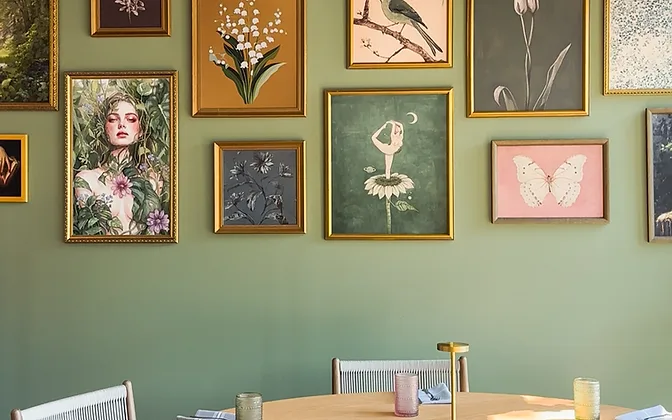

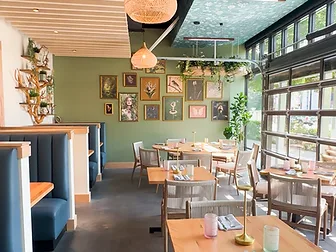
See this philosophy in action in our Flora project. See our living room design guide for more.
What makes a modern kitchen?
A modern kitchen has:
- Flat-panel cabinets (no raised panels, no ornate molding) in a matte finish.
- Integrated appliances that sit flush with the cabinetry.
- A single slab backsplash — stone or quartz, not tile.
- Matte black or brushed brass hardware.
- A large island with seating, used as the social hub.
What makes a modern bedroom?
A modern bedroom has:
- A platform bed low to the ground, in wood or upholstered in a neutral fabric.
- Minimal bedding — white or neutral linens, no excess pillows.
- Nightstands that are simple — a floating shelf or a small wood stool.
- One piece of art — large-scale, not a gallery wall.
- A single pendant or sconce instead of a bedside lamp.
If you are drawn to this aesthetic and want help bringing it to life in your home, we would love to help. For more on how modern fits into the broader landscape of design styles, see our guide on interior design styles explained.

Bring modern design to your home
Get in touchHow to Make a Small Space Look Bigger: 12 Designer Tricks
12 designer tricks to make a small space look bigger — mirrors, monochrome palettes, leggy furniture, curtain height, and more. No renovation needed.
How to Choose Paint Colors for Your Home
Learn how to choose paint colors with confidence — undertones, the 60-30-10 rule, testing swatches, and building a whole-home palette that flows.
Living Room Interior Design: The Complete Guide
The complete guide to living room interior design — rug sizes, furniture arrangement, curtain height, lighting, color palettes, and more.
Interior Design Styles Explained: Modern, Boho, Scandinavian, Coastal & More
Interior design styles explained — Modern, Contemporary, Scandinavian, Boho, Coastal, Industrial, Traditional, Transitional, and more. A glossary.