Home Staging Tips to Sell Your House Faster
Home staging helps sell houses faster and for more money by helping buyers see themselves in the space. The core principles are depersonalizing without making the home feel cold, focusing on the rooms buyers care about most, and understanding what shows in listing photos versus what matters in person. Whether you do it yourself on a budget or hire a full staging service, the right staging can be the difference between a house that sits and one that sells.
How do you depersonalize without making the home feel cold?
Depersonalizing means removing your stuff so buyers can picture theirs. But if you strip everything out, the home feels empty and small — buyers cannot gauge scale without furniture. The balance:
- Remove personal items: family photos, awards, religious items, political items. Buyers should not feel like they are in someone else's home.
- Keep enough furniture to show scale and function. A bedroom needs a bed; a dining room needs a table. Remove excess pieces but keep the essentials.
- Neutralize the color. If your walls are bold, paint them a warm white or soft gray. See our guide on how to choose paint colors for safe, buyer-friendly options.
- Add warmth with texture, not color. A neutral throw, a linen pillow, or a simple vase with greenery adds life without personality.
What are the room-by-room quick wins?
Entry
The entry is the first impression. Clear the console table, add a clean doormat, and make sure the door and hardware are clean. A single vase with fresh greenery signals "cared for."
Living room
- Remove excess furniture — keep the sofa, one or two chairs, a coffee table, and a rug.
- Fluff and straighten all pillows and cushions.
- Open the curtains fully. Light sells.
Primary bedroom
- Make the bed with clean, neutral linens — white or soft gray.
- Remove personal items from the nightstand.
- Clear the closet floor. Buyers open closets — a stuffed closet says "not enough storage."
Kitchen
- Clear the counters completely. Put away appliances, knife blocks, and dish racks.
- Clean the sink and faucet until they shine.
- A bowl of lemons or a single cutting board on the counter adds life without clutter.
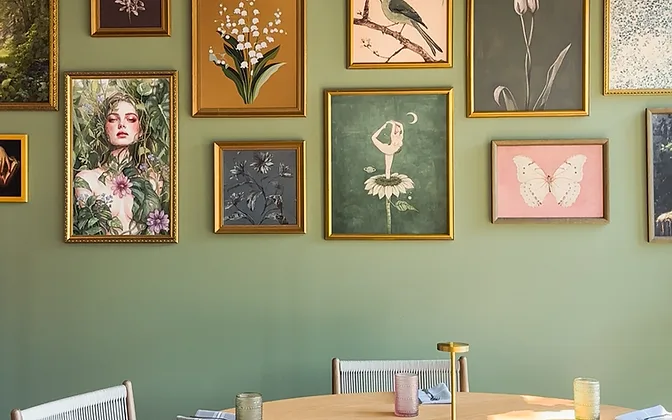

See staging-ready interiors in our Flora project.
What do buyers notice in listing photos vs. in person?
In listing photos (what gets them to the showing):
- Light — dark photos get skipped.
- Clean lines — clutter reads as chaos in a photo.
- Scale — furniture that is too large makes the room look small.
- Color — bold walls distract from the architecture.
In person (what makes them make an offer):
- Smell — pet smells, cooking smells, and air fresheners all turn buyers off. Clean and air out the home before every showing.
- Flow — can they walk through the home without navigating around furniture?
- Storage — closets and cabinets that are stuffed say "not enough space."
- Details — scuffed baseboards, loose hardware, and dripping faucets signal deferred maintenance.
Budget staging vs. full staging — when does each make sense?
Budget staging (DIY)
Cost: $0 to $500. You do the work — decluttering, depersonalizing, rearranging furniture, painting, and adding a few neutral accessories.
Best for: Homes that are already neutral, sellers with time and energy, and lower-priced homes where the ROI of full staging does not justify the cost.
Full staging (professional)
Cost: $1,500 to $5,000 for a consultation and rental furniture for 30 to 60 days. A stager brings in neutral furniture, art, and accessories designed to make the home photograph and show well.
Best for: Empty homes (furniture shows scale), higher-priced homes where the ROI is clear, and homes with challenging layouts that need professional furniture arrangement.
For more on making rooms look their best, see our guides on living room interior design and small space design ideas. If you are preparing to sell and want professional staging guidance, we can help.

Frequently asked questions
Stage your home to sell
Get in touchHow to Make a Small Space Look Bigger: 12 Designer Tricks
12 designer tricks to make a small space look bigger — mirrors, monochrome palettes, leggy furniture, curtain height, and more. No renovation needed.
Living Room Interior Design: The Complete Guide
The complete guide to living room interior design — rug sizes, furniture arrangement, curtain height, lighting, color palettes, and more.
 Translate