Best Flooring for Restaurants: A Designer's Guide
The best flooring for restaurants balances cost, slip resistance, maintenance, durability, and acoustic impact. LVT, polished concrete, tile, and wood-look options each have distinct advantages depending on the zone — kitchen floors need slip resistance and durability, dining floors need comfort and sound absorption, and bar floors need to handle spills and heavy traffic. This guide compares them side by side.
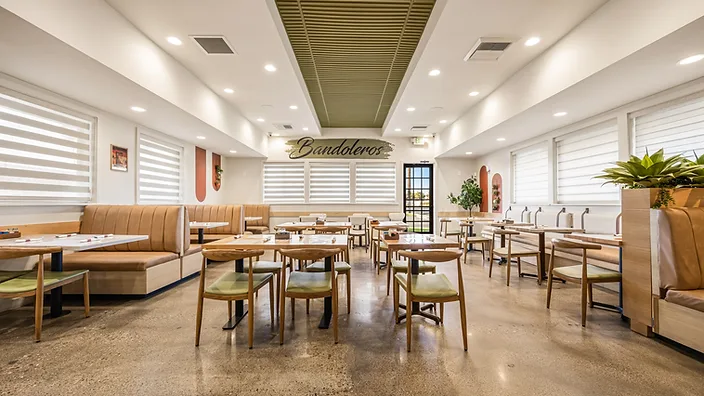
How do restaurant flooring options compare?
| Material | Cost per sq ft | Slip resistance | Maintenance | Durability | Acoustic impact | |---|---|---|---|---|---| | LVT (Luxury Vinyl Tile) | $4 to $12 | Good (textured surface) | Low — easy to clean | 10 to 15 years | Good — absorbs sound | | Polished concrete | $6 to $15 | Fair (needs treatment) | Low — seal and sweep | 20+ years | Poor — reflects sound | | Porcelain tile | $5 to $20 | Good (textured) | Low — grout needs care | 20+ years | Poor — reflects sound | | Wood-look tile | $6 to $18 | Good | Low — grout needs care | 20+ years | Poor — reflects sound | | Engineered wood | $8 to $20 | Fair | Medium — needs refinishing | 10 to 20 years | Good — absorbs sound |
LVT (Luxury Vinyl Tile)
LVT is the most versatile restaurant flooring. It is waterproof, slip-resistant (when textured), affordable, and available in wood and stone looks that are nearly indistinguishable from the real thing.
Best for: Dining areas, bars, and kitchens (with a commercial-grade rating). LVT is the go-to for fast-casual and fast-fine concepts.
Drawback: Can dent under heavy equipment. Use a harder material in the kitchen if you move ovens or prep tables frequently.
Polished concrete
Concrete is durable, seamless, and industrial-chic. It works in raw, modern, or loft-style restaurants. It can be stained, polished, or sealed in a range of finishes.
Best for: Dining areas in industrial or modern concepts. Not ideal for kitchens without a slip-resistant additive — polished concrete is slippery when wet.
Drawback: Hard on the feet for staff who stand all day. Reflects sound, making the room louder. Needs anti-fatigue mats in the kitchen.
Porcelain tile
Porcelain is the workhorse of restaurant flooring. It is waterproof, scratch-resistant, and available in an enormous range of colors and textures. Large-format tiles minimize grout lines and look modern.
Best for: Kitchens, restrooms, and high-traffic dining areas. Textured porcelain is the standard for commercial kitchen floors.
Drawback: Grout lines stain and need regular cleaning. Reflects sound. Hard on feet.
Wood-look tile
Wood-look tile gives you the warmth of wood with the durability of tile. It is porcelain tile printed with a wood grain pattern. Best for dining areas where you want a wood floor but need commercial durability.
Best for: Dining areas in rustic, farmhouse, or warm concepts.
Drawback: Same as porcelain — grout maintenance and sound reflection. The grout lines between planks can look artificial if not installed carefully.
See warm wood-tone flooring anchor a vibrant dining room in our Mariscos El Güero project.
Engineered wood
Real wood adds warmth and absorbs sound — a rare combination in restaurant flooring. Engineered wood (plywood core with a hardwood veneer) is more stable than solid wood in the humidity and temperature swings of a restaurant.
Best for: Fine dining and upscale concepts where warmth and acoustics matter more than maximum durability.
Drawback: Needs regular refinishing. Not suitable for kitchens or areas with heavy spills.
Which flooring should you use in each zone?
- Kitchen: Textured porcelain tile or commercial-grade LVT. Slip resistance is non-negotiable.
- Dining room: LVT, wood-look tile, or engineered wood depending on budget and concept.
- Bar: LVT or porcelain. Bars see spills and heavy traffic — choose durability.
- Restrooms: Porcelain tile. Waterproof and easy to sanitize.
For more restaurant design guidance, see our guides on restaurant interior design ideas and restaurant interior design cost. If you are planning a restaurant project, we can help you choose the right materials.

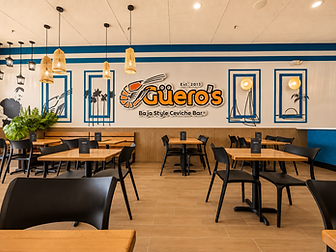
Choose the right flooring
Get in touchRestaurant Interior Design: 15 Ideas That Improve the Customer Experience
15 restaurant interior design ideas that improve the customer experience — from entry and dining floor to lighting, acoustics, and back-of-house.
How Much Does Restaurant Interior Design Cost?
How much does restaurant interior design cost? Per-square-foot ranges by tier, what's included, and how owners accidentally blow their budget.
 Translate